Business
Oversight vs Oversite: What’s the Difference? Correct Meaning, Usage, Examples, and Common Mistakes


English is full of words that look similar but have completely different meanings, spellings, or levels of acceptance. One of the most common questions writers, students, bloggers, and professionals ask is whether the correct word is oversight or oversite. Because both words appear similar and are pronounced almost the same, many people assume they are interchangeable. However, that assumption often leads to spelling mistakes in emails, business reports, academic papers, blog posts, and professional communication. Understanding the difference between oversight and oversite is essential if you want to write accurately and confidently. This guide explains the meaning of oversight, discusses whether oversite is a valid English word, provides real-life examples, highlights common mistakes, and shares practical tips to help you remember the correct spelling every time.
What Does “Oversight” Mean?
The word oversight is a standard English noun with two well-established meanings. The first refers to supervision, monitoring, or management. Organizations, businesses, government agencies, and educational institutions often provide oversight to ensure that projects, employees, finances, or operations follow established rules and standards. In this sense, oversight is considered an important responsibility because it promotes accountability, quality, and transparency.
The second meaning of oversight is an unintentional mistake, omission, or failure to notice something. For example, forgetting to attach a document to an email or accidentally leaving a person’s name off a list can both be described as an oversight. Although these two meanings may appear unrelated, context almost always makes the intended meaning clear. This dual meaning has existed in English for centuries and is accepted in formal and informal writing.
Is “Oversite” a Correct Word?
In modern English, oversite is generally not the correct spelling when you mean supervision or an accidental mistake. Most major dictionaries, grammar references, style guides, and educational resources recognize oversight as the proper word.
Many people mistakenly type oversite because it resembles familiar words ending in site, such as website, worksite, job site, or construction site. Since those words are common, writers sometimes assume that oversite follows the same spelling pattern. In reality, when referring to supervision or an accidental omission, oversight is the accepted spelling, while oversite is usually treated as a spelling error.
Oversight vs Oversite: The Key Differences
Although the two spellings differ by only one letter, they are not interchangeable in standard English.
Oversight is the correct word used to describe supervision, monitoring, management, or an accidental mistake. It is recognized by dictionaries and widely used in business, education, law, journalism, and everyday communication.
Oversite, on the other hand, is generally considered a misspelling when someone intends to write oversight. While the word may occasionally appear in specialized technical contexts or as a proper name, it is not the correct choice for ordinary English writing about supervision or mistakes.
Understanding this distinction helps writers communicate more clearly and avoid unnecessary grammatical errors.
Why Do People Confuse Oversight and Oversite?
There are several reasons why this confusion is so common. First, both words sound almost identical when spoken aloud. Second, modern English contains many words ending in site, making the incorrect spelling seem reasonable. Third, fast typing and autocorrect errors often introduce spelling mistakes into emails, articles, and online content. Finally, because thousands of people search online using the incorrect spelling, search engines frequently display results containing both versions, reinforcing the confusion.
Fortunately, once you understand the correct spelling and meaning, avoiding this mistake becomes much easier.
Examples of Correct Usage
Studying examples is one of the best ways to remember proper grammar. Here are several examples showing the correct use of oversight.
The project remained under the oversight of the senior management team to ensure every milestone was completed on time.
The missing financial report was an unfortunate oversight that delayed the quarterly review.
Government agencies provide regulatory oversight to protect consumers and maintain public safety.
The committee’s oversight helped improve efficiency across the entire organization.
Leaving your name off the invitation was simply an oversight and not intentional.
In each of these examples, oversight is the correct spelling. Replacing it with oversite would be considered incorrect in standard English.
Common Mistakes Writers Make
One of the most frequent mistakes is assuming that oversite is an acceptable alternative spelling. Unlike words with British and American spelling variations, oversight does not have an accepted alternative form in this context. Another common mistake is misunderstanding the two meanings of oversight. Some readers believe the word always means supervision, while others think it always means an accidental error. In reality, both meanings are correct, and context determines which one is intended.
Writers also make the mistake of relying entirely on spell-check software. While grammar tools are useful, proofreading your work remains essential for catching context-related errors.
How to Remember the Correct Spelling
A simple memory trick is to focus on the word “sight.” Sight is connected with seeing or watching. Someone who provides oversight is watching over a process or organization. Likewise, an oversight as a mistake occurs because something was not seen or noticed. This association makes the correct spelling much easier to remember than trying to memorize it without context.
Reading quality books, articles, and professional publications also reinforces correct spelling through repeated exposure.
Why Correct Usage Matters
Using the correct spelling demonstrates professionalism, attention to detail, and strong communication skills. Whether you are writing business reports, academic assignments, marketing content, blog articles, or emails, proper grammar helps readers trust your work. Small spelling errors can distract readers and reduce the credibility of otherwise excellent content.
For website owners and bloggers, accurate spelling also contributes to better search engine optimization. Search engines prioritize high-quality content that answers user questions clearly and accurately. Although many people search for oversite, the article should explain that oversight is the correct word while naturally including the misspelled version to satisfy user search intent.
Conclusion
The debate over oversight vs oversite is easy to resolve once you understand standard English usage. Oversight is the correct spelling and is used to describe either supervision and monitoring or an accidental omission or mistake. Oversite, by contrast, is generally considered a misspelling in these contexts and should be avoided in professional, academic, and everyday writing. By learning the meanings, reviewing practical examples, and remembering the connection between sight and seeing, you can confidently choose the correct word every time. Strong writing depends on accuracy, and mastering commonly confused words such as these helps you communicate more effectively and build credibility with your readers.
Frequently Asked Questions (FAQs)
1. Which is correct: oversight or oversite?
Oversight is the correct spelling in standard English. Oversite is generally a misspelling when referring to supervision or an accidental mistake.
2. What does oversight mean?
Oversight has two accepted meanings: supervision or monitoring, and an accidental omission or mistake.
3. Is oversite a real English word?
In most everyday and professional contexts, oversite is not the correct word. Writers should use oversight instead.
4. Why do people confuse oversight and oversite?
The confusion happens because both words sound similar, and many English words end with site, making the incorrect spelling seem logical.
5. Can oversight mean both supervision and a mistake?
Yes. The meaning depends on the context in which the word is used.
6. How can I remember the correct spelling?
Think of sight as seeing or watching. Oversight involves watching over something or failing to see something, making the spelling easier to remember.
7. Is “oversight vs oversite” a common Google search?
Yes. Many users search for this phrase because they want to know the correct spelling, meaning, and usage of these commonly confused terms.
Business
Bay Window Installation: Complete 2026 Guide to Cost, Process, Design, and Professional Installation
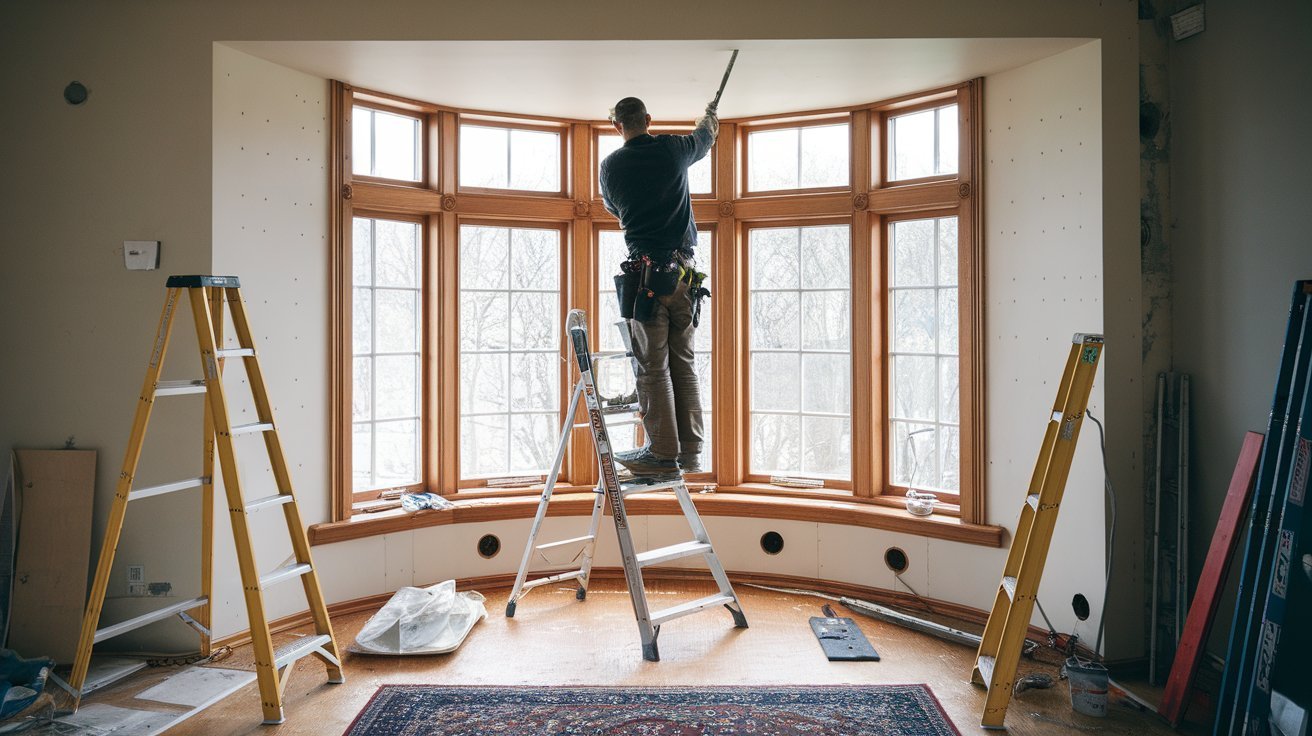
A bay window installation can dramatically change the appearance, natural lighting, and usable space of a home. Unlike a standard flat window, a bay window projects outward from the exterior wall, creating a distinctive architectural feature while opening the interior to wider views and additional daylight. A typical bay window consists of a large central window with angled side windows, creating extra interior space that can be used for seating, storage, or decorative purposes.
Because a bay window projects beyond the home’s exterior wall, installation is more complex than replacing a standard window. The project can involve structural framing, support systems, waterproof flashing, insulation, roofing, exterior finishing, and interior trim. Proper installation is essential because mistakes can lead to water intrusion, drafts, structural movement, or operational problems.
For homeowners planning a bay window installation in 2026, understanding the process, cost factors, materials, and installation requirements can make it easier to plan a successful home improvement project.
What Is a Bay Window and Why Install One?
A bay window is a multi-panel window structure that extends outward from the main wall of a house. The central window is usually fixed or larger than the side sections, while the side windows are installed at an angle to create the projecting shape.
The design offers several important benefits. First, the outward projection allows more natural light to enter the room from multiple directions. Second, the design can create additional interior floor or seating space. A bay window may become a comfortable reading area, a breakfast nook, a display space for plants, or a built-in window seat.
Bay windows can also improve a property’s architectural character and curb appeal. From the outside, they create depth and visual interest that a standard flat window cannot provide.
However, a bay window should not be treated as a simple replacement project. It is an assembly that may include several interconnected window units, a projecting base, structural supports, and a roof or roof cab. The window must be properly supported over the long term and carefully integrated with the wall’s weather-resistant system.
Planning and Measuring for Bay Window Installation
Successful bay window installation begins with careful planning. Before ordering the window, installers need accurate measurements of the opening and surrounding wall.
A professional assessment may examine:
- Wall construction
- Load-bearing conditions
- Existing framing
- Electrical wiring or plumbing
- Exterior siding or brick
- Roof and drainage conditions
- Required window projection
- Support requirements
- Local permit requirements
A replacement project involving an existing bay window can be more straightforward because the basic structural opening and projection already exist. Creating a completely new bay window opening can require considerably more work, especially when modifying a load-bearing wall.
The rough opening must be properly framed and supported. Depending on the structure, the installation may require a correctly sized header, king studs, jack studs, blocking, and additional reinforcement. The exact structural requirements depend on the home and local building codes.
Projection angles also affect the final appearance and interior space. Bay windows are commonly designed around angles such as 30 or 45 degrees, although configurations vary according to manufacturer and architectural style. Accurate measuring is critical because an incorrectly sized bay window can create serious installation and weatherproofing challenges.
The Bay Window Installation Process Step by Step
The installation process normally begins by removing the existing window or opening the wall for a new installation. The rough opening is then inspected for damage, rot, structural weaknesses, and level conditions.
Once the framing is ready, installers prepare the opening for weather protection. Flashing is one of the most important parts of the entire project. Window openings interrupt the home’s drainage plane, making them vulnerable to water intrusion if flashing is installed incorrectly. Proper flashing should be layered so that water is directed outward rather than into the wall cavity.
A typical sequence includes sill or pan flashing, installation of the window, side flashing overlapping the sill flashing, and top flashing overlapping the side flashing.
The bay window unit is then lifted into position. Because bay windows can be heavy and awkward to handle, installation generally requires multiple people and appropriate temporary support. The window must be carefully checked for level, plumb, and square alignment before it is permanently secured.
Depending on the design, the window may use support cables attached above, brackets or knee braces below, or another manufacturer-approved structural support system. These supports are essential because the projecting section must remain stable over time.
After the main unit is secured, installers complete the roof structure, insulation, air sealing, exterior trim, interior trim, and final finishing.
Bay Window Flashing, Waterproofing, and Roofing
One of the greatest risks associated with poor bay window installation is water damage.
Because the window projects outward from the house, it creates additional joints, corners, roof connections, and exterior surfaces where water can potentially enter. Proper flashing and waterproofing are therefore essential.
Federal building-science guidance emphasizes that flashing should be correctly lapped and integrated with the home’s drainage plane. A properly flashed system directs water out of the wall assembly rather than trapping it inside the wall cavity.
The roof above a projecting bay window also requires careful construction. The roof cab or upper covering may need roofing underlayment, shingles or another approved roofing material, and properly installed flashing where the bay roof meets the home’s exterior wall.
Common problems caused by poor weatherproofing include:
- Water stains around the interior window
- Rotting wall framing
- Mold or moisture damage
- Drafts
- Damaged insulation
- Leaks around the roof cab
- Deteriorating trim
For this reason, waterproofing should never be treated as an afterthought. A visually attractive installation can still fail if the flashing and drainage details are incorrect.
Insulation and Energy Efficiency After Installation
A well-installed bay window should not only look attractive; it should also contribute to a comfortable indoor environment.
The projecting base and roof area can create spaces that require careful insulation and air sealing. If gaps remain around the window frame or within the seat board and roof cavity, the area may become cold in winter and excessively warm in summer.
Professional installation generally includes sealing appropriate gaps around the frame and insulating the projecting base. The goal is to reduce unwanted air movement while maintaining proper moisture management.
The window itself can also influence energy performance. Homeowners may choose features such as double-pane or triple-pane glass, Low-E coatings, insulated frames, and other energy-efficient glazing options, depending on climate and budget.
The right choice depends on local weather conditions, window orientation, and the home’s overall energy design. A large bay window can introduce significant daylight, but glass selection and installation quality remain important for controlling heat transfer and improving comfort.
How Much Does Bay Window Installation Cost in 2026?
The cost of a bay window installation in 2026 varies significantly because no two homes or projects are exactly the same.
Recent 2026 cost estimates place a standard installed bay window broadly in the range of approximately $2,000 to $6,000, while a new opening involving substantial structural work can reach $4,000 to $10,000 or more. Costs vary according to location, size, materials, labor rates, structural modifications, and finishing requirements.
Major cost factors include:
- Size of the bay window
- Vinyl, wood, fiberglass, aluminum, or composite frame material
- Glass type and energy-efficiency upgrades
- Existing bay replacement versus new installation
- Structural framing requirements
- Support cables or brackets
- Roof construction
- Flashing and waterproofing
- Interior and exterior trim
- Permit and inspection costs
- Local labor rates
Replacing an existing bay window is generally less complicated than cutting a new opening into an exterior wall. A new installation may require structural engineering or additional review, particularly when a load-bearing wall is modified.
Homeowners should compare detailed estimates rather than selecting a contractor based only on the lowest total price.
Choosing the Right Bay Window Material and Design
The frame material can influence the cost, appearance, maintenance requirements, and long-term durability of a bay window.
Vinyl is often chosen for its relatively affordable cost and low maintenance requirements. Wood provides a traditional appearance and can be painted or customized, but it generally requires more maintenance. Fiberglass can offer strength and dimensional stability, while wood-clad windows combine the appearance of wood on the interior with a more weather-resistant exterior surface.
The ideal material depends on the home’s architecture and the owner’s budget.
Homeowners should also consider the number of window panels, projection depth, side-window operation, glass configuration, and interior finishing.
A deep projection can create more usable interior space but may require additional structural support and increase project complexity. A smaller bay may be easier to integrate into the home’s design while still improving natural light and exterior appearance.
DIY vs. Professional Bay Window Installation
An experienced homeowner with advanced framing, roofing, waterproofing, and window-installation skills may be capable of completing certain bay window projects. However, bay window installation is generally considered an advanced construction project.
The work can involve heavy lifting, structural modifications, precise leveling, weatherproofing, roofing, and support systems. An incorrectly installed bay window can create expensive problems that are difficult to detect until water damage or structural movement has already occurred.
Professional installation is often the better choice, particularly when:
- A load-bearing wall is being modified.
- A completely new opening is required.
- The bay window is large or unusually heavy.
- Roofing and flashing must be integrated with existing materials.
- Structural support systems are needed.
- Permits or inspections are required.
Before choosing an installer, homeowners should request detailed information about structural work, flashing methods, insulation, trim, cleanup, warranties, and responsibility for permits.
Conclusion
A professionally planned bay window installation can add natural light, usable space, architectural character, and long-term visual appeal to a home. However, the project requires considerably more planning than a standard window replacement.
From structural framing and support systems to flashing, roofing, insulation, and finishing, every stage affects the long-term performance of the installation. The most successful projects begin with accurate measurements, appropriate structural assessment, high-quality materials, and careful attention to waterproofing.
For homeowners planning a bay window project in 2026, investing in proper installation can help protect the home from drafts, leaks, structural problems, and unnecessary repair costs while creating a beautiful and functional new focal point.
Frequently Asked Questions About Bay Window Installation
How long does bay window installation take?
A straightforward replacement can often be completed within one to three days, while a new installation requiring structural changes and extensive finishing may take several days or longer.
How much does a bay window installation cost in 2026?
A typical installed project may range from approximately $2,000 to $6,000, while new openings involving structural modifications can cost significantly more.
Does a bay window need structural support?
Yes. Because a bay window projects outward and can be heavy, it generally requires an appropriate manufacturer-approved support system, such as cables, brackets, knee braces, or another engineered method.
Why is flashing important around a bay window?
Flashing helps direct water away from the window opening and wall cavity. Properly lapped flashing is critical for reducing the risk of water intrusion and hidden wall damage.
Can a bay window improve a home’s appearance?
Yes. A bay window can increase natural light, architectural interest, interior space, and curb appeal, making it one of the most visually transformative window upgrades available.
Should bay window installation be done by professionals?
For most homeowners, professional installation is recommended, especially when the project involves structural framing, load-bearing walls, support systems, roofing, or complex waterproofing.

LetsBuildUp org is an online content platform centered on parenting, family wellness, work-life balance, digital parenting, education, careers, and practical lifestyle guidance. In 2026, the website presents itself as a resource for people looking for useful ideas about managing family responsibilities while also navigating professional and personal goals.
The site’s core message is built around helping readers balance parenthood and career development. At the same time, its published content extends beyond traditional parenting subjects into technology, education, home improvement, business, lifestyle, and other areas relevant to modern families.
What Is LetsBuildUp org?
LetsBuildUp org is a family-oriented website that publishes informational articles across several connected subjects. Its primary navigation highlights Family Wellness, Parenting & Work-Life Balance, and Digital Parenting, alongside pages such as About and Contact.
The site’s stated purpose is to provide readers with expert insights, practical tips, and community support. This positioning makes the website relevant to parents who are balancing household responsibilities with employment, education, personal development, and technology.
The broader collection of posts demonstrates that the site is not restricted to one narrow parenting topic. Readers can find articles about children’s development, family relationships, digital safety, careers, education, home projects, financial considerations, and lifestyle decisions.
For that reason, we can think of LetsBuildUp org as a general family and lifestyle publication with a strong parenting foundation.
Main Topics Covered by LetsBuildUp org
The site’s Family Wellness section focuses on the broader well-being of families. Topics appearing across the website include children’s activities, family relationships, support for older relatives, and practical approaches to creating a healthier home environment.
The Parenting & Work-Life Balance section addresses the challenges that arise when professional responsibilities and family life overlap. Articles in this area discuss subjects such as managing busy schedules, financial planning, children’s behavior, education, and other everyday concerns.
Meanwhile, Digital Parenting examines how families can navigate technology. Modern children interact with smartphones, online platforms, games, applications, and digital communication from an early age, making technology an increasingly important part of parenting.
These three categories provide a useful framework for understanding the website’s central themes: family well-being, practical parenting, and responsible technology use.
LetsBuildUp org and Modern Parenting
Parenting has become increasingly connected to other aspects of daily life. Parents may simultaneously manage jobs, school schedules, household finances, children’s activities, online safety, and their own personal goals.
LetsBuildUp org approaches these challenges through practical content designed to help readers think about organization, communication, family routines, and personal development. Its website describes its advice as practical and intended to fit into everyday life.
The site’s approach recognizes that there is no single solution that works for every household. Family circumstances differ according to children’s ages, employment arrangements, schedules, resources, and individual priorities.
Consequently, the most useful articles are those that provide ideas that readers can adapt rather than presenting one rigid method as universally correct.
For parents, this can make the website useful as an introductory source when researching everyday questions. More specialized subjects, however, should be supplemented with information from qualified professionals and authoritative organizations.
Education, Careers, and Professional Development
One notable feature of LetsBuildUp org is its interest in education and careers. These subjects fit naturally with the site’s central focus on balancing family life and professional ambitions.
The site’s current content includes material about higher education and professional development, including discussion of doctorate-level education in organizational leadership.
Career decisions can have a major effect on family routines, finances, location, and available time. Parents considering additional education may therefore need to evaluate tuition, workload, scheduling, career opportunities, and the potential effect on household responsibilities.
LetsBuildUp org’s broader content model allows these professional questions to appear alongside parenting material, reflecting the reality that career and family decisions are often connected.
For readers considering a degree or career change, online articles can provide useful background information, but specific academic requirements, employment prospects, and professional regulations should always be confirmed through official institutions.
Digital Parenting and Technology in 2026
Technology is one of the most important subjects for modern families, and Digital Parenting is a dedicated area of LetsBuildUp org.
Parents today may need to think about screen habits, online communication, privacy, social platforms, applications, gaming, and children’s exposure to digital information. The website’s digital-parenting content addresses these broader questions while presenting technology as something families need to manage rather than simply avoid.
A useful digital-parenting strategy can include establishing age-appropriate boundaries, discussing online behavior openly, protecting account information, and teaching children how to recognize potentially unsafe digital situations.
Technology also has positive applications. Educational tools, communication platforms, creative software, and productivity applications can support learning and family organization when used appropriately.
The key issue is therefore balanced technology use. Digital tools can be valuable, but families benefit from combining them with offline activities, communication, rest, education, and healthy routines.
Other Lifestyle and Practical Content on LetsBuildUp org
Although the site’s identity is strongly connected to parenting, its content extends into several other areas. The homepage currently displays articles involving home improvement, technology, education, business, lifestyle, family activities, and professional development.
This broad approach makes sense because family life rarely exists in isolation. A household may simultaneously need information about education, careers, home organization, finances, technology, and personal well-being.
For example, a parent preparing for a career change may also need to reorganize family schedules. Someone considering home improvements may need to think about children’s safety. A family adopting new technology may need to establish digital rules.
These overlapping subjects create a natural connection between the site’s categories and its wider collection of articles.
How to Use LetsBuildUp org Responsibly
As with any broad online publication, readers should evaluate individual articles according to their subject matter. General lifestyle content can provide ideas and practical inspiration, but specialized claims deserve additional verification.
This is especially important when an article involves health, financial decisions, legal matters, education requirements, or child safety. Such subjects can have significant consequences, and readers should consult appropriate professionals or authoritative sources when necessary.
We should also check the publication date, author information, and supporting evidence when researching an important topic. Information can become outdated, particularly in technology, education, employment, and digital safety.
Using LetsBuildUp org as a starting point for research rather than automatically treating every article as definitive allows readers to benefit from its ideas while maintaining a responsible approach to information.
Why LetsBuildUp org Matters in 2026
The continuing relevance of LetsBuildUp org comes from the interconnected nature of modern family life. Parenting is no longer limited to childcare questions. It intersects with employment, education, technology, finances, health, home organization, and personal development.
The website’s combination of Family Wellness, Parenting & Work-Life Balance, and Digital Parenting reflects these overlapping responsibilities. Its broader articles extend that focus into other subjects that families and professionals may encounter.
For readers, the value of the platform lies in its ability to provide a starting point for exploring these subjects in one place. Someone researching parenting may also discover information about careers or technology, while a professional may find family-oriented perspectives relevant to their own circumstances.
The site’s community-oriented positioning also emphasizes the importance of shared experiences and practical support, which can be valuable when navigating the complexities of modern family life.
Frequently Asked Questions About LetsBuildUp org
What is LetsBuildUp org?
LetsBuildUp org is an online family and lifestyle publication focusing on parenting, family wellness, work-life balance, digital parenting, education, careers, and related subjects.
Who is LetsBuildUp org for?
Its primary audience is parents and families, although its wider content can also be useful for professionals, students, homeowners, and readers interested in technology and lifestyle topics.
What are the main categories?
The principal categories highlighted by the website are Family Wellness, Parenting & Work-Life Balance, and Digital Parenting.
Does LetsBuildUp org only publish parenting articles?
No. The website also covers education, careers, technology, home improvement, business, lifestyle, and other practical subjects.
Can LetsBuildUp org be used for professional advice?
It can provide general information and ideas, but specialized decisions involving health, law, finance, education, or child safety should be checked against appropriate authoritative sources and professional advice.
Conclusion
LetsBuildUp org is a broad online resource built around modern family life, with parenting and family wellness at its core. Its primary categories cover Family Wellness, Parenting & Work-Life Balance, and Digital Parenting, while its wider article library extends into education, careers, technology, home improvement, business, and lifestyle.
The website’s central idea is particularly relevant in 2026, when families frequently have to balance professional responsibilities, children’s needs, digital technology, education, household tasks, and personal development at the same time.
For readers exploring LetsBuildUp org, the best approach is to use its articles as practical starting points, identify information relevant to their circumstances, and verify specialized claims through reliable authoritative sources. With its combination of parenting guidance, work-life topics, digital awareness, and broader lifestyle content, the platform offers a useful perspective on the many interconnected parts of contemporary family life.
Business
Oversite or Oversight: What’s the Difference? Meaning, Correct Usage, Examples, and Common Mistakes
The English language contains many words that appear similar but have completely different meanings or levels of acceptance in standard writing. One of the most common questions people ask is whether they should write oversite or oversight. At first glance, these words look nearly identical, and many writers assume they are interchangeable. However, this assumption often leads to spelling errors, grammatical mistakes, and misunderstandings in professional, academic, and everyday communication. Understanding the distinction between these terms is essential for anyone who wants to write clearly and accurately. In this comprehensive guide, you’ll learn the correct meaning of oversight, discover whether oversite is a real word, explore practical examples, understand common mistakes, and gain useful tips that will help you remember the correct usage in every situation.
What Does “Oversight” Mean?
Oversight is a correct and widely accepted English word with two primary meanings. The first meaning refers to the act of supervising, monitoring, or managing a process, project, organization, or activity. In this sense, oversight is considered an important responsibility because it helps ensure that work is completed properly and according to established standards. Businesses, government agencies, educational institutions, and nonprofit organizations often establish oversight committees or management teams to monitor operations, reduce risks, and maintain accountability.
The second meaning of oversight refers to an unintentional mistake, omission, or failure to notice something important. This meaning is also extremely common in both spoken and written English. For example, if someone forgets to include an important document in an email, they may apologize by saying, “That was an oversight.” In this context, the word indicates that the error was accidental rather than intentional.
These two meanings may seem opposite at first, but context usually makes the intended meaning clear. Readers naturally understand whether the writer is discussing supervision or an accidental mistake based on the surrounding sentence.
Is “Oversite” a Correct Word?
One of the biggest sources of confusion is the spelling oversite. In modern English, oversite is generally not accepted as the correct spelling when referring to supervision or an accidental mistake. Most dictionaries, grammar guides, style manuals, and writing experts recognize oversight as the proper word.
People often write oversite because it resembles other English words ending in “site,” such as website, campsite, worksite, or construction site. This similarity causes many writers to assume that “oversite” follows the same pattern. In reality, this spelling is almost always considered a typographical or spelling error when the intended word is oversight.
If your goal is to write professional emails, business reports, academic papers, blog articles, or website content, using oversight is the correct choice. Spell-checking software and grammar tools will also usually identify oversite as an incorrect spelling in this context.
Why Do People Confuse Oversight and Oversite?
There are several reasons why these words are frequently confused. First, they are visually similar, differing by only one letter. Second, many people hear the word more often than they see it written, leading them to guess the spelling based on pronunciation. Third, digital communication encourages fast typing, increasing the likelihood of simple spelling mistakes. Finally, search engines often display both spellings because many users search for the incorrect version while trying to find the correct answer.
This widespread confusion makes it even more important to understand the correct usage. Learning the proper spelling once can help you avoid repeated mistakes in future writing.
Examples of Correct Usage
Understanding grammar becomes much easier when you study examples in real-world situations. Consider the following sentences:
- The financial department operates under strict oversight to ensure compliance with company policies.
- The manager accepted responsibility for the oversight that delayed the project.
- Government agencies provide regulatory oversight for public safety.
- Missing your name on the invitation was simply an oversight.
- The board maintains careful oversight of organizational finances.
Each sentence demonstrates one of the accepted meanings of oversight. None of these examples should use the spelling oversite.
Common Mistakes Writers Make
One of the most frequent errors is assuming that oversite is an alternative spelling of oversight. Unlike some English words that have regional variations, this is generally not the case. Another common mistake is using the wrong meaning of oversight without considering context. Since the word can refer to either supervision or an accidental omission, readers rely on surrounding information to understand which meaning is intended.
Some writers also overuse the word in situations where more specific vocabulary would improve clarity. Depending on the context, words such as supervision, monitoring, management, review, omission, error, or mistake may communicate the intended meaning more precisely.
Tips for Remembering the Correct Word
An easy way to remember the correct spelling is to focus on the ending “sight.” The word “sight” relates to seeing or watching, which connects naturally to supervision and noticing details. Someone providing oversight is watching a process, while an oversight as a mistake occurs because something was not seen. This mental connection makes the correct spelling much easier to remember.
Another helpful strategy is to proofread important documents before sending or publishing them. Reading your writing carefully allows you to catch spelling errors that automatic tools might occasionally miss.
Why Correct Word Choice Matters
Choosing the correct word improves communication, builds credibility, and demonstrates attention to detail. In professional environments, accurate language reflects positively on your knowledge and writing skills. Employers, clients, teachers, and readers often judge written communication based on grammar, spelling, and vocabulary. A small spelling mistake like writing oversite instead of oversight may seem minor, but repeated errors can reduce the overall quality of your writing.
For website owners and content creators, using the correct spelling also supports search engine optimization because search engines generally recognize authoritative, well-written content as more valuable for users. While some articles intentionally include common misspellings to address user search intent, they should always explain that oversight is the correct form.
Conclusion
The confusion between oversite and oversight is understandable because the words look similar and sound alike. However, standard English recognizes oversight as the correct spelling when referring to supervision, monitoring, or an accidental mistake. The spelling oversite is generally considered a misspelling in these contexts and should be avoided in professional, academic, and everyday writing. By understanding the meanings, studying examples, and remembering the connection between “sight” and watching, you can confidently choose the correct word every time. Strong writing depends on accuracy, and mastering commonly confused words like these is an important step toward becoming a more effective communicator.
Frequently Asked Questions (FAQs)
1. Is it oversite or oversight?
Oversight is the correct spelling in standard English. Oversite is generally considered a misspelling when referring to supervision or an accidental mistake.
2. What does oversight mean?
Oversight can mean either supervision or monitoring of a process, or an accidental omission or mistake.
3. Is oversite listed in dictionaries?
Most major dictionaries do not recognize oversite as the correct form for the meanings commonly associated with oversight.
4. Why do people spell oversight as oversite?
People often confuse the spelling because it resembles words like “website” or “worksite,” and both words are pronounced similarly.
5. Can oversight have two meanings?
Yes. It can refer to careful supervision or to an unintentional mistake, depending on the context.
6. Which spelling should I use in professional writing?
Always use oversight when referring to supervision, monitoring, or an accidental omission to ensure clear and correct communication.

Hanging Hardie Siding: A Complete Guide to Installing Fiber Cement Siding in 2026

Anne Kolb Center: Complete Guide to Trails, Wildlife, Kayaking, Tower, Aquarium, and 2026 Visits

Bay Window Installation: Complete 2026 Guide to Cost, Process, Design, and Professional Installation


 Lifestyle2 months ago
Pyjamaspapper: The Complete Guide to Comfort, Style, and Better Sleep
- Health2 months ago
Aleksandra Plus: A Complete Guide to Features, Benefits, and Uses
- Business2 months ago
kompama: A Complete Guide to Understanding Its Meaning, Purpose, and Potential
- Business2 months ago
Oversite or Oversight: What’s the Difference? Meaning, Correct Usage, Examples, and Common Mistakes
- Education2 months ago
Studiae: The Complete Guide to Academic Excellence, Learning, and Intellectual Growth
- Tech2 months ago
gadgetfreeks.com: A Complete Guide to Its Features, Content, and Growing Popularity
- Lifestyle2 months ago
itzhak ezratti wife: Everything We Know About Her Life, Family, and Privacy
- Entertainment2 months ago
Play BattleSquare.com.The Complete Guide to Online Strategy Gaming